
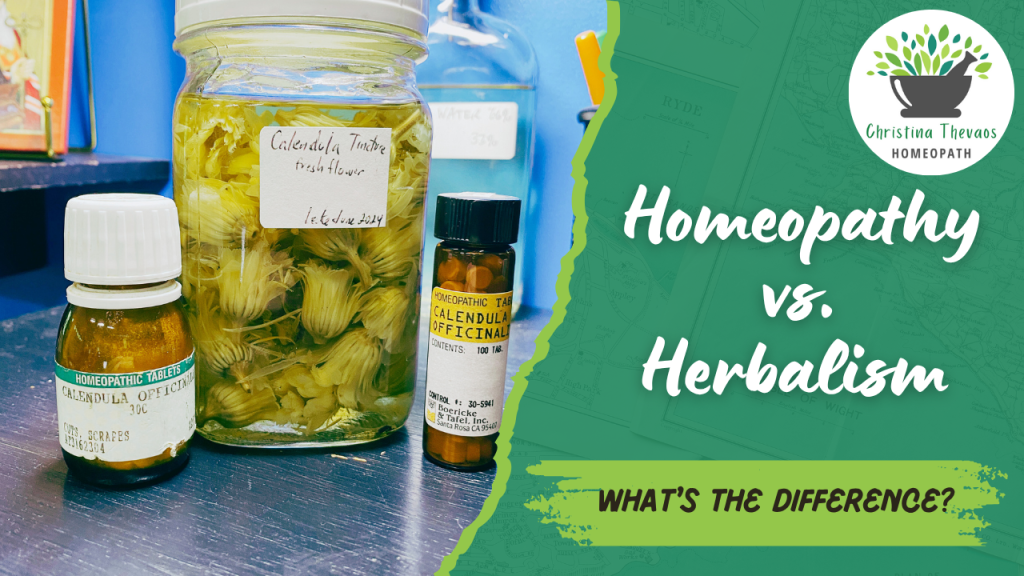
When it comes to natural remedies, there are two terms often used interchangeably by those new to holisitic health and that is homeopathy and herbalism. While both are grounded in nature’s healing power, they represent two very different systems of medicine—each with unique principles, preparation methods, and mechanisms of action. The difference between Homeopathy vs. Herbalism and understanding the major differences in each natural healing approach is key to you and your family’s success.
If you’re exploring alternative health options, understanding the major and minor differences between homeopathy and herbalism can help you choose the most suitable path for your healing journey.
What Is Herbalism?
Herbalism, also known as botanical medicine or phytotherapy, is the practice of using plants and plant extracts to support health and treat illness. It has been used for thousands of years in cultures across the world, from Ayurveda to Traditional Chinese Medicine to Native American Tradition to European and Western herbal traditions.
Herbalism Core Principle: The plant’s natural biochemical properties affect the body directly to stimulate healing.
Preparation: Herbal remedies are made from dried or fresh plants and come in forms such as teas, tinctures, capsules, salves, and extracts.
Example: Using turmeric root to reduce inflammation, peppermint leaft tea for indigestion, yarrow to stop bleeding, or valerian root for encourage sleep.
What Is Homeopathy? Key Principles
Homeopathy is a system of medicine founded in the late 18th century by Samuel Hahnemann. It is based on several key principles:
1. “Like cures like” – this means that a substance that can cause symptoms in a healthy person can, in very tiny amounts, help cure those symptoms in a sick person.
2. “Law of the minimum dose”- or the idea that an extremely low or infinitesimal doses (as used in homeopathy) might produce gentle, yet effective, stimulation of the body’s self-healing mechanisms.
3. “Law of similars”- meaning is the idea that a substance that causes symptoms in a healthy person can be used, in very small amounts, to treat similar symptoms in a sick person.
In short, a Homeopath will use a very dilute amount of a substance to stimulate the bodies innate healing response to “fix itself”, the way God intended. Through the use of such ultra-diluted substances, we greatly reduce any risk of side effects through toxic exposure.
Preparation: Remedies are created through a process of serial dilution and succussion (striking the bottle against something firm, yet elastic). The resulting mixture often contains little to no molecular trace of the original substance, but retains its energetic imprint or frequency.
Source Material: Homeopathic remedies are made from many different kinds of substances including herbal (plants like windflower or oak trees) matter, minerals (like silica or gold), animals (like dog’s milk or snake venom), etc.
Example: Using Allium cepa (red onion) in homeopathic form to treat allergy symptoms like watery eyes and sneezing—the same symptoms onions cause when cutting them!
Major Differences Between Homeopathy vs Herbalism
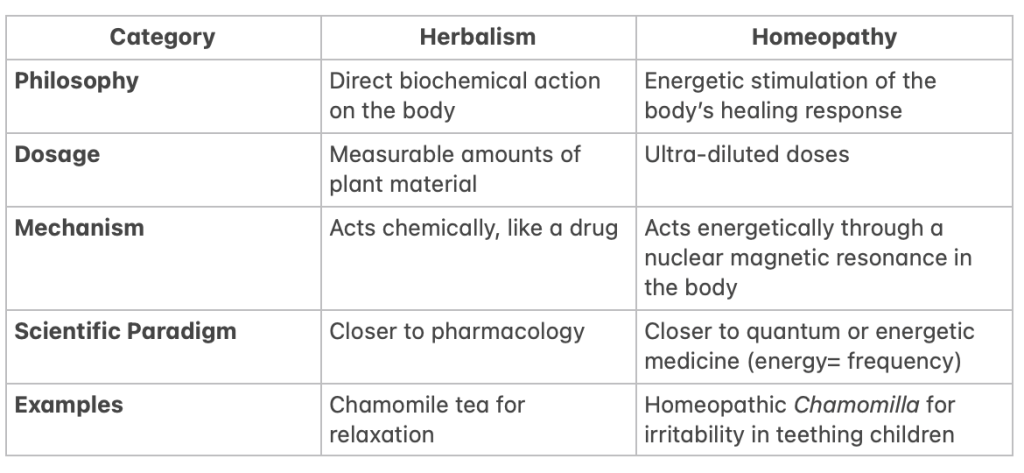
Minor (but Important) Differences
- Custom vs. General Use: Herbal formulas may be more “one-size-fits-all” and prescribed based on a “condition”. Homeopathic prescriptions are individualized down to emotional and personality traits, time of day aggravation/amelioration, type of discharge and character of pain.
- Contraindications: Herbs may interact with prescription or over the counter medications. They may even produce side effects in sensitive individuals or when given in too high a dose. Homeopathic remedies rarely have contraindications or side effects, due to their ultra-diluted nature.
- Storage Sensitivity: Homeopathic remedies can be sensitive to electromagnetic fields, strong odors, direct sunlight and freezing. However homeopathic remedies, when well kept, do not have an expiration date (despite dates placed onto bottles due to FDA regulations! I have 50 year old remedies in my pharmacy that are still just as effective!). Herbs are generally more stable to EMF’s, however as they age, they will loose their potency/effectiveness.
Can Homeopathy and Herbalism Work Together?
Yes—homeopathy and herbalism can complement each other beautifully when used appropriately. For example, a homeopathic remedy can support emotional or constitutional healing, while an herbal tincture offers immediate relief for symptoms like painful hemorrhoids, mild insomnia or heart palpitations.
Working with a trained Homeopathic Practitioner who understands both modalities can ensure synergy rather than conflict. Afterall, it’s a very individualized approach!
Final Thoughts
While both herbalism and homeopathy tap into nature’s wisdom, their foundations are profoundly different. Herbalism delivers measurable, physical doses of plant compounds. Homeopathy, by contrast, works on an energetic level to stimulate the body’s own capacity to heal. And, homeopathic remedies ONLY WORK when they are a good match to your symptoms!
If you’re deciding between natural approaches, understanding the difference between homeopathy vs herbalism gives you clarity on how each works and when to use them.
There may still be questions on how and when to use each. I am available to answer questions and help guide you! Use the button below to schedule a consultation!